
=== WordPress Importer === Contributors: wordpressdotorg Donate link: https://wordpressfoundation.org/donate/ Tags: importer, wordpress Requires at least: 5.2 Tested up to: 6.8 Requires PHP: 7.2 Stable tag: 0.9.5 License: GPLv2 or later License URI: https://www.gnu.org/licenses/gpl-2.0.html Import posts, pages, comments, custom fields, categories, tags and more from a WordPress export file. == Description == The WordPress Importer will import the following content from a WordPress export file: * Posts, pages and other custom post types * Comments and comment meta * Custom fields and post meta * Categories, tags and terms from custom taxonomies and term meta * Authors For further information and instructions please see the [documention on Importing Content](https://wordpress.org/support/article/importing-content/#wordpress). == Installation == The quickest method for installing the importer is: 1. Visit Tools -> Import in the WordPress dashboard 1. Click on the WordPress link in the list of importers 1. Click "Install Now" 1. Finally click "Activate Plugin & Run Importer" If you would prefer to do things manually then follow these instructions: 1. Upload the `wordpress-importer` folder to the `/wp-content/plugins/` directory 1. Activate the plugin through the 'Plugins' menu in WordPress 1. Go to the Tools -> Import screen, click on WordPress == Changelog == = 0.9.5 = * Rewrite CSS URLs in block markup (e.g., cover blocks with background images). * Code refactoring: Extract import processing logic into separate methods to prepare for future streaming support. * Update Playwright and @playwright/test dependencies from 1.55.0 to 1.56.1. * Clean up vendor-patched dependencies by removing dotfiles and GitHub workflow files. = 0.9.4 = * Fix a bug that caused self-closing blocks to be incorrectly serialized during URL rewriting. = 0.9.3 = * Rewrite attachment URLs to the new URL structure = 0.9.2 = * Rewrite site URLs in block attributes. = 0.9.1 = * Add support for rewriting site URLs in post content and excerpts. = 0.9.0 = * Introduce a new XML parser class `WXR_Parser_XML_Processor` that replaces the deprecated `WXR_Parser_Regex` class. = 0.8.4 = * Fix a bug on deserialization of untrusted input. * Update compatibility tested-up-to to WordPress 6.7.2. = 0.8.3 = * Update compatibility tested-up-to to WordPress 6.7. * Update call to `post_exists` to include `post_type` in the query * PHP 8.4 compatibility fixes. = 0.8.2 = * Update compatibility tested-up-to to WordPress 6.4.2. * Update doc URL references. * Adjust workflow triggers. = 0.8.1 = * Update compatibility tested-up-to to WordPress 6.2. * Update paths to build status badges. = 0.8 = * Update minimum WordPress requirement to 5.2. * Update minimum PHP requirement to 5.6. * Update compatibility tested-up-to to WordPress 6.1. * PHP 8.0, 8.1, and 8.2 compatibility fixes. * Fix a bug causing blank lines in content to be ignored when using the Regex Parser. * Fix a bug resulting in a PHP fatal error when IMPORT_DEBUG is enabled and a category creation error occurs. * Improved Unit testing & automated testing. = 0.7 = * Update minimum WordPress requirement to 3.7 and ensure compatibility with PHP 7.4. * Fix bug that caused not importing term meta. * Fix bug that caused slashes to be stripped from imported meta data. * Fix bug that prevented import of serialized meta data. * Fix file size check after download of remote files with HTTP compression enabled. * Improve accessibility of form fields by adding missing labels. * Improve imports for remote file URLs without name and/or extension. * Add support for `wp:base_blog_url` field to allow importing multiple files with WP-CLI. * Add support for term meta parsing when using the regular expressions or XML parser. * Developers: All PHP classes have been moved into their own files. * Developers: Allow to change `IMPORT_DEBUG` via `wp-config.php` and change default value to the value of `WP_DEBUG`. = 0.6.4 = * Improve PHP7 compatibility. * Fix bug that caused slashes to be stripped from imported comments. * Fix for various deprecation notices including `wp_get_http()` and `screen_icon()`. * Fix for importing export files with multiline term meta data. = 0.6.3 = * Add support for import term metadata. * Fix bug that caused slashes to be stripped from imported content. * Fix bug that caused characters to be stripped inside of CDATA in some cases. * Fix PHP notices. = 0.6.2 = * Add `wp_import_existing_post` filter, see [Trac ticket #33721](https://core.trac.wordpress.org/ticket/33721). = 0.6 = * Support for WXR 1.2 and multiple CDATA sections * Post aren't duplicates if their post_type's are different = 0.5.2 = * Double check that the uploaded export file exists before processing it. This prevents incorrect error messages when an export file is uploaded to a server with bad permissions and WordPress 3.3 or 3.3.1 is being used. = 0.5 = * Import comment meta (requires export from WordPress 3.2) * Minor bugfixes and enhancements = 0.4 = * Map comment user_id where possible * Import attachments from `wp:attachment_url` * Upload attachments to correct directory * Remap resized image URLs correctly = 0.3 = * Use an XML Parser if possible * Proper import support for nav menus * ... and much more, see [Trac ticket #15197](https://core.trac.wordpress.org/ticket/15197) = 0.1 = * Initial release == Frequently Asked Questions == = Help! I'm getting out of memory errors or a blank screen. = If your exported file is very large, the import script may run into your host's configured memory limit for PHP. A message like "Fatal error: Allowed memory size of 8388608 bytes exhausted" indicates that the script can't successfully import your XML file under the current PHP memory limit. If you have access to the php.ini file, you can manually increase the limit; if you do not (your WordPress installation is hosted on a shared server, for instance), you might have to break your exported XML file into several smaller pieces and run the import script one at a time. For those with shared hosting, the best alternative may be to consult hosting support to determine the safest approach for running the import. A host may be willing to temporarily lift the memory limit and/or run the process directly from their end. -- [Support Article: Importing Content](https://wordpress.org/support/article/importing-content/#before-importing) == Filters == The importer has a couple of filters to allow you to completely enable/block certain features: * `import_allow_create_users`: return false if you only want to allow mapping to existing users * `import_allow_fetch_attachments`: return false if you do not wish to allow importing and downloading of attachments * `import_attachment_size_limit`: return an integer value for the maximum file size in bytes to save (default is 0, which is unlimited) There are also a few actions available to hook into: * `import_start`: occurs after the export file has been uploaded and author import settings have been chosen * `import_end`: called after the last output from the importer Quy trình sản xuất dược phẩm, thực phẩm chức năng dạng cốm – Công ty dược phẩm takarai
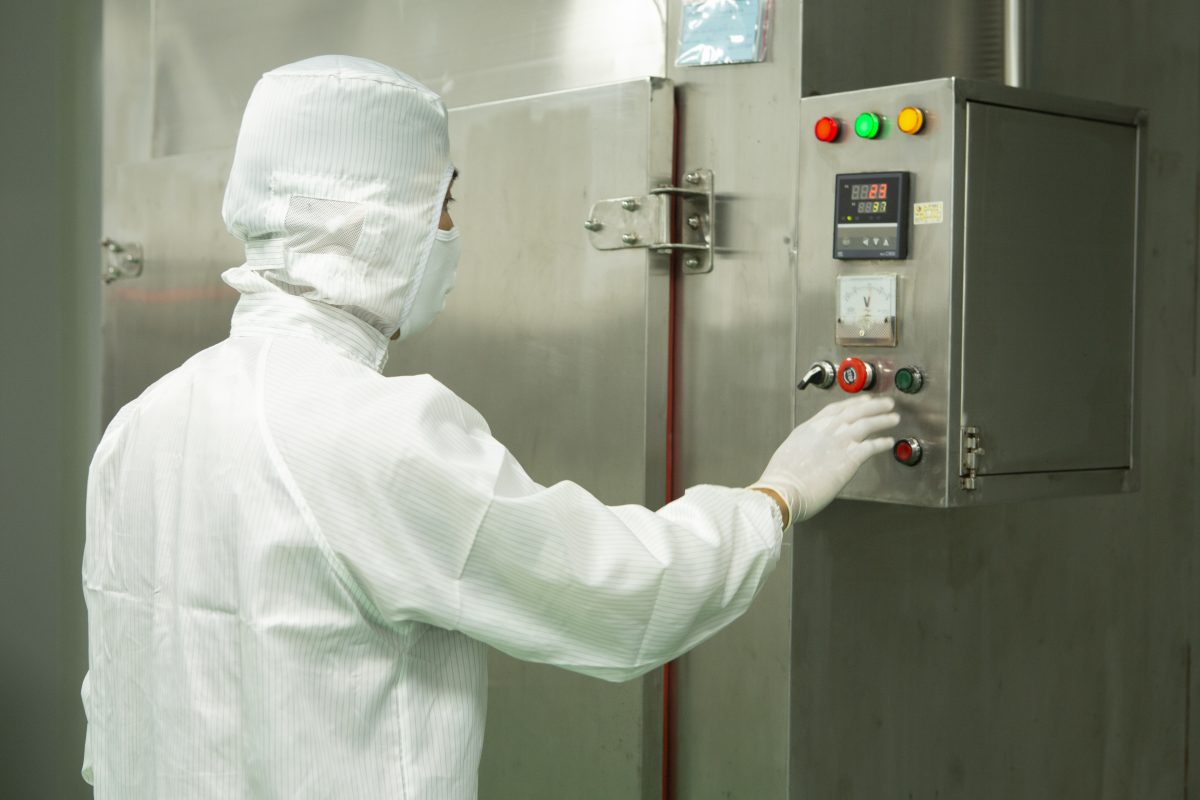
Quy trình sản xuất dược phẩm, thực phẩm chức năng dạng cốm


Để đảm bảo chất lượng của mỗi sản phẩm trước khi đến tay đối tác, người tiêu dùng, Takarai luôn đảm bảo quy trình sản xuất tại tất cả các dây chuyền đều tuân thủ nghiêm ngặt theo tiêu chuẩn GMP. Chất lượng sản phẩm, sự hài lòng của khách hàng chính là thước đo hiệu quả nhất cho sự làm việc nghiêm túc, trách nhiệm của Takarai.

Với dây chuyền sản xuất tiên tiến, hiện đại, Takarai luôn đáp ứng được những yêu cầu khó khăn nhất của mỗi một loại sản phẩm và sản phẩm dạng cốm cũng không phải ngoại lệ.

Cốm (granules) là sản phẩm rắn, được điều chế từ bột sản phẩm và tá dược dính tạo thành các hạt nhỏ xốp (đường kính từ l-2mm) hay sợi ngắn xốp, thường dùng để uống.

Các bước trong dây chuyền sản xuất dược phẩm, thực phẩm chức năng dạng cốm:

Bước 1: Nhận nguyên vật liệu vào kho
Bước 2: Lấy mẫu kiểm nghiệm nguyên vật liệu
Bước 3: Chuyển nguyên vật liệu đã được kiểm nghiệm vào xưởng sản xuất
Bước 4: Cân chia mẻ, chuyển vào phun sấy tạo cốm, bao trộn ngoài phù hợp với dạng bào chế.
Bước 5: Đóng gói cốm
Bước 6: Đóng hộp thành phẩm
Bước 7: Lấy mẫu thành phẩm đã đóng gói/đóng hộp để kiểm nghiệm
Bước 8: Nhập kho/Lưu hồ sơ/Lưu mẫu –> Phân phối
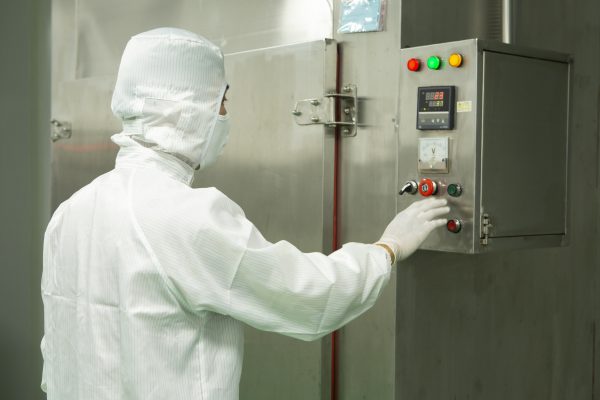


Những loại máy móc được sử dụng trong dây chuyền sản xuất dạng cốm:

Quy trình sản xuất dược phẩm, thực phẩm chức năng dạng cốm được triển khai trên dây chuyền tự động với hệ thống máy móc, trang thiết bị hiện đại, đặc biệt là sử dụng 2 loại máy bao gồm:

  1. Máy phun sấy tạo cốm tầng sôi

Phương pháp tạo cốm trong máy sấy tầng sôi là quá trình kết tập các tiểu phân bột lơ lửng trong buồng sấy nhờ luồng không khí cấp vào buồng sấy và bằng chất lỏng (tá dược dính) được phun vào buồng sấy. Các tiểu phân bột khi lơ lửng trong buồng sấy được thấm ướt từ từ với dung dịch tá dược dính và trở nên có khả năng dính với các tiểu phân khác để từ từ tạo thành hạt cốm.

Máy sở hữu vô vàn ưu điểm nổi bật như:

– Nâng cao hiệu suất, sản phẩm sấy chất lượng cao, đồng đều về màu sắc, tốc độ sấy nhanh, nhiệt độ sấy thấp, ổn định.

–  Thời gian sấy ngắn, không hề xảy ra hiện tượng quá nhiệt cục bộ trong khối cốm/hạt.

– Dễ dàng lấy mẫu đem đi kiểm tra chất lượng kể cả khi máy đang hoạt động.

 – Chất lượng sản phẩm đạt được tiêu chuẩn rất cao, hạt đồng đều cả về trọng lượng lẫn kích thước.

Ngoài ra, máy phun sấy và tạo hạt tầng sôi  của Takarai còn có thêm hệ thống cấp nhiệt độc lập bằng điện, hệ thống lọc HEPHA H13 cho bụi, khí, mùi thải đầu ra (thải ra trần kỹ thuật).

  1. Máy đóng gói cốm

– Các sản phẩm cốm được đóng vào túi bằng các máy đóng túi tự động, các túi được đánh giá chủ yếu về độ đồng đều khối lượng.

– Máy đóng gói cốm được thiết kế và chế tạo với công nghệ cao và chất lượng ổn định, đảm bảo cho kích thước gói, định lượng, định hình được chính xác và ổn định.

– Quá trình vận hành của máy bao gồm các giai đoạn: tạo mẫu gói, định lượng, đổ nguyên liệu, hàn gói. Với hệ thống máy móc hiện đại của Takarai quá trình này còn được tích hợp thêm máy in để in hạn sử dụng trên màng giấy, cắt gói và đếm số lượng thành phẩm.

Kiểm soát chất lượng

Các sản phẩm dạng cốm của Takarai luôn có được chất lượng tốt nhất là bởi quá trình kiểm tra, kiểm soát liên tục gắt gao từ khâu nguyên liệu đầu vào cho tới thành phẩm:

– Ngay từ khâu ban đầu, nguyên liệu thô khi mới bắt đầu vào kho sẽ được lấy mẫu kiểm nghiệm theo các tiêu chuẩn đã thống nhất và công bố từ trước. Yêu cầu của bước này là 100% lô nguyên vật liệu đạt tiêu chuẩn. Nếu đạt, nguyên vật liệu mới được chuyển tiếp sang xưởng sản xuất. Nếu không đạt, quy trình sẽ dừng lại ngay. 

– Máy phun sấy tạo cốm tầng sôi mà Takarai sử dụng cho phép kỹ thuật viên lấy mẫu cốm – để kiểm tra, định tính, định lượng đảm bảo bán thành phẩm luôn có chất lượng tốt nhất. Nếu kỹ thuật viên phát hiện vấn đề sẽ ngay lập tức dừng quy trình làm việc để tìm hiểu nguyên nhân và khắc phục.

– Sản phẩm thành phẩm cuối cùng sẽ tiếp tục được lấy mẫu kiểm nghiệm theo quy định. Yêu cầu của bước này là 100% lô đạt chất lượng tiêu chuẩn thì mới đưa ra phân phối. 100% các lô sản phẩm sản xuất tại nhà máy Takarai đều được lưu mẫu/lưu hồ sơ đúng theo quy trình.

Cùng tham khảo một số sản phẩm dạng cốm được sản xuất trên dây chuyền công nghệ hiện đại của nhà máy sản xuất Takarai:


Trả lời

Email của bạn sẽ không được hiển thị công khai. Các trường bắt buộc được đánh dấu *